Saturday, September 26, 2026

The Academic and Social Value of Ethnic Students

 Article: The Academic and Social Value of Ethnic Students

Author: Christine E. Sleeter


Argument: This Author, Sleeter, argues throughout this article about how little POC are being represented in history classes in schools. Sleeter uses different interviews with different ages and races of students in schools and asks them about what kinds of things they are leaning about/ what kinds of people they are learning about and what could make it better. in this article the main argument is that mainly white history is taught throughout The United States and POC aren't getting represented or learning about there past. This text also tells us that students are aware of this problem and they don't like it. They know they are being taught way more about their white peers than themselves and they have to do more research outside of schools to actually know more. often times this also lead people to disinterest in schools which can lead them to not go to college or not even finish high school because of how unrepresented they are.
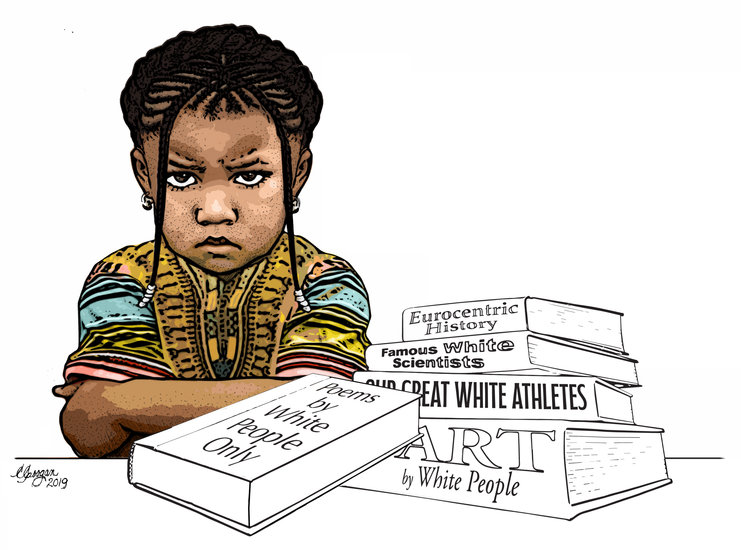
Black History Is Missing In U.S. History Education -

Reflection: I thought this article was actually very interesting to read about. In my high school most of the students there were white and so were the teachers and we thought we were a good school and we taught students or leaned as students an equal amount of history about white people and black people and people in asian counties. However looking back and rethinking about it all, most of the history we learned was about white people and Europe and very rarely there would be the occasional times where we would learn only about  black people with slavery and only about Native American people when it came to "Columbus Day" or VERY rarly when we would talk either about North Korea or the times in Asia where people would be foot bound. If I'm being honest I thought we were being taught a lot but now looking back I don't think I was taught very much at all. if that's pretty much all I know about all these different kinds of peoples history but I know a lot more about white peoples history all throughout time then I believe there is a problem in not only the school systems but also how people act like this isn't a problem.

AI: I did not use AI

Black History in Schools

Monday, September 21, 2026

Shifting the Paradigm from Deficit Oriented Schools to Asset Based Models

 Author: Shannon Renkly

Article: Shifting the Paradigm from Deficit Oriented Schools to Asset Based Models, Leaders Need to Promote an Asset Orientation in our Schools

Extended Comments about Hanna V:Fun & Interactive Activities for Kids in School | Resilient Educator    

    In Hannas blog post she pointed about 2 main factors of what this article was talking about and why children might struggle with certain things. One of them being that many children get very antsy and distracted when they're in school or being forced to stay in one place for a long period of time. The other being that people struggle with certain subjects and excel in others just depending on who they are. I believe that the way classrooms are usually set up makes it difficult for many students to actually pay attention and do their best work. Like Hanna mentioned, children learn in different ways and even if they don't understand a lesson, that doesn't mean we should give up teaching them but rather to show them a different way of doing it. every student has some kind of talent or something that they excel at and that is what should be highlighted in classes to showcase how brilliant all students are while also paying close attention and more focus care onto what each student needs help with to give them the best opportunity's possible.

Reflection/ Questions: What kinds of actives can we include in classrooms that help students learn even better while also making it fun and entertaining? 

AI: didn't use it

link

Saturday, September 12, 2026

Anyon Policy

 Text: What "Counts" as Educational Policy? Notes Towards a New Paradigm

Author: Jean Anyon

Format/ Argument: Jean Anyon argues in this text that the new school and educational polices do not help students and schools to get better but instead people need to focus on the poverty children and families are facing to actually help the education system. Anyon's main point is that we as a society need to make sure people have stable income and housing to make sure students have time and safety to prioritize their education. students who are struggling at home or have to help take care of their families do not have time to practice school work at home or can't focus on it at school because of how stressful it can be.

America Closed the Opportunity Gap Once and 'We Can Do It Again', Says 'Our  Kids' Author | NEA

Reflection/ Questions: Personally I don't believe we as a country are able to change the housing and poverty situation right now because of how our government is "ruling" and how people are acting. What do you think?

AI Statement: I used Ai and said "give me an overview of this article".  For some reason it didn't really help me with this article and barely gave me any information about it.  

link

Tuesday, September 8, 2026

Public Schooling

 Text: The Broken Model

Author: Khan

Video: A Short History of Public Schooling

Quotes: "In the standard curriculum, vast and beautiful areas of human thought are artificially chopped into manageable chunks called “subjects.” Concepts that should flow into one another like ocean currents are dammed up into “units.”(Pg 64)

In the world everything is connected, whether its math and reading or art and science etc. everything is woven together. Students should be learning in a way where that is the truth, however those lessens are broken up in a way that teach children to not look at learning and school as a whole but rather independent subjects that "can" stand without the others. 

"The idea was not to produce independent thinkers, but to churn out loyal and tractable citizens who would learn the value of submitting to the authority of parents, teachers, church, and, ultimately, king." (Pg 76)

In this section, the author is discussing the norms in school curriculums and how they were built. The way these norms were created was to make the students do whatever they are told and not use their brain in a more human and natural way but instead a practiced and "perfected" way.

"works. But we do ourselves and our kids a disservice if we fail to look past those minimum requirements and recognize the places where the system has become creaky and archaic, and why old customs and standards no longer suffice." (Pg82)

In this section, the author made it clear that we cannot shut down our education systems and start over because that would be physically impossible, but instead looking at our curriculum with open eyes and realizing what could be done to make it better. We need to be willing and able to change what is wrong for our students and make it right.

Reflection/questions: I really liked this article and video because it was interesting to learn about the history of schools and how its not much different today even though we like to think it is. the idea of every subject flowing together like an ocean was really eye opening too and made me think about how we could possibly make schools better even with all the plans for a classroom made by the schools and government.

AI: I did not use ai for this assignment.

11 Facts About the History of Education in America

Tuesday, September 1, 2026

Privilege, Power, and Difference

 Privilege, Power, and Difference Allan G. Johnson


ARGUMENT: this author, Allan Johnson, argues that inequality doesn't happen from individual people and evilness but that it comes from the social systems people have in place that give unearned privilege to certain groups. Johnson starts off with the problems in our society, for example, racism, sexism, capitalism, and white supremacy, and then moves on to how the system works. The two main things that stuck out to me here was when he goes against the myth of individualism, which is the idea that no matter how a person grows up or looks like they can completely build themselves a perfect success. Also, Johnson explains that these systems stay in place because a lot of the time the dominant groups most likely to be either white people, men, wealthy people or heterosexuals don’t recognize their privilege or accept it. 


REFLECTION/QUESTIONS: later on, Johnson says the best way for us to stop this from happening is to accept that this is happening and stop blaming the victims. However, my question is that I feel like most of the older generations are the ones that are actually the people that are in denial about this topic. so what happens later on down the line when more generations have come and people are becoming more open minded? Will we get better with time or will it be like the same cycle that continues where we think we’re getting better but really we’re just slowly repeating old habits? 

AI: I did use ai! I wanted to know how it would break down the text into specific sections and chapters. The question I asked it was “how would you break down the main points Allan Johnson is making in Privilege, Power, and difference?” This helped me talk about the book in a more organized way rather than jumping around all over the place with my thoughts.

Hyperlink to Johnson Video


Get to know me using pictures


Delpit, Silenced Dialogue

Author: Lisa Delpit Title:  Other Peoples Children Argument: Lisa Delpit argues in The Silenced Dialogue that educational reforms make child...